How Long Should a Resume Be in Australia?
One page, two, or four? The better question is how much space you need to prove you're a strong candidate without wasting a recruiter's time.
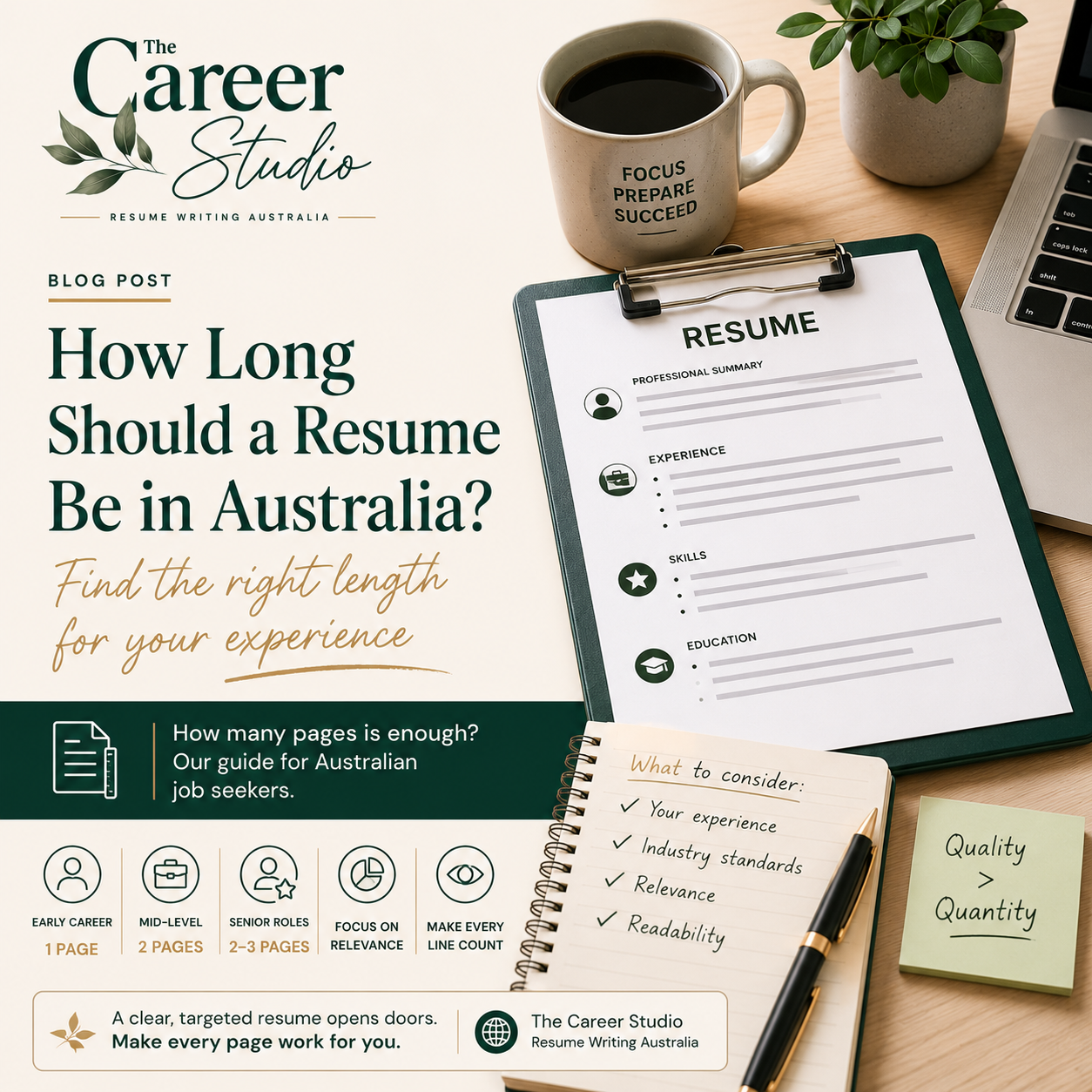
One page? Two pages? Four pages?
Ask ten people how long a resume should be and you'll probably get ten different answers.
The better question is: how much space do you need to prove you're a strong candidate without wasting the recruiter's time?
For many Australian job seekers, two to three pages will be appropriate. But there are exceptions.
When a One-Page Resume Can Work
A one-page resume may be suitable for:
- school leavers
- graduates
- candidates with limited employment history
- casual workers
- early-career applicants
If you only have one or two relevant roles, stretching your resume to three pages isn't necessary.
When Two Pages Makes Sense
Two pages works well for many candidates with a moderate amount of experience. You can usually fit:
- professional summary
- skills
- recent employment
- achievements
- education
- licences or qualifications
without overcrowding the document.
When Three Pages Is Reasonable
More experienced candidates may need three pages. This is particularly true for:
- managers
- executives
- technical professionals
- project managers
- senior tradespeople
- candidates with substantial project experience
The key is relevance. A three-page resume packed with valuable information is better than a two-page resume with important experience removed simply to meet an arbitrary rule.
What About Four or Five Pages?
Sometimes longer resumes are justified. But often they're long because they contain too much unnecessary detail. Common space-wasters include:
- every responsibility from every job
- outdated technology
- old casual jobs
- excessive personal information
- paragraphs instead of bullets
- repeated skills
- references
- generic career objectives
If your resume is five pages long, ask yourself whether everything deserves to be there.
Focus on Your Recent Experience
Your most recent employment will generally receive the most attention.
Give recent and relevant roles more detail. Older positions can often be condensed. For example:
Earlier Career HistoryCompany Name — Position — 2011–2014Company Name — Position — 2008–2011
This preserves your history without giving outdated positions half a page each.
Don't Shrink Everything to Fit
One common mistake is trying to squeeze three pages of content onto two pages by using tiny fonts and almost no spacing.
That makes the resume harder to read. Cut weaker content instead. Readability matters.
Every Line Should Earn Its Place
Ask this question about every section: does this information help convince an employer to interview me?
If the answer is no, consider removing it.
Your resume doesn't need to document your entire life. It needs to market your suitability for your next role.
Not sure what to cut and what to keep?
A $99 Resume & Job Search Review gives you a professional read on your resume — length, structure, content — with a clear list of what to change.
Keep reading
How to Write a LinkedIn Bio That Gets You Noticed
Your About section is often the first thing a recruiter reads. Here's how to make it specific, searchable and genuinely persuasive.
ATS Resumes in Australia: What Job Seekers Actually Need to Know
Applicant Tracking Systems aren't robots deciding your career — but understanding how they work will make your resume stronger.
Why Am I Not Getting Interviews? 7 Resume Problems That Could Be Costing You Jobs
If you're applying for suitable roles and hearing nothing back, your experience probably isn't the problem — how your resume communicates it might be.